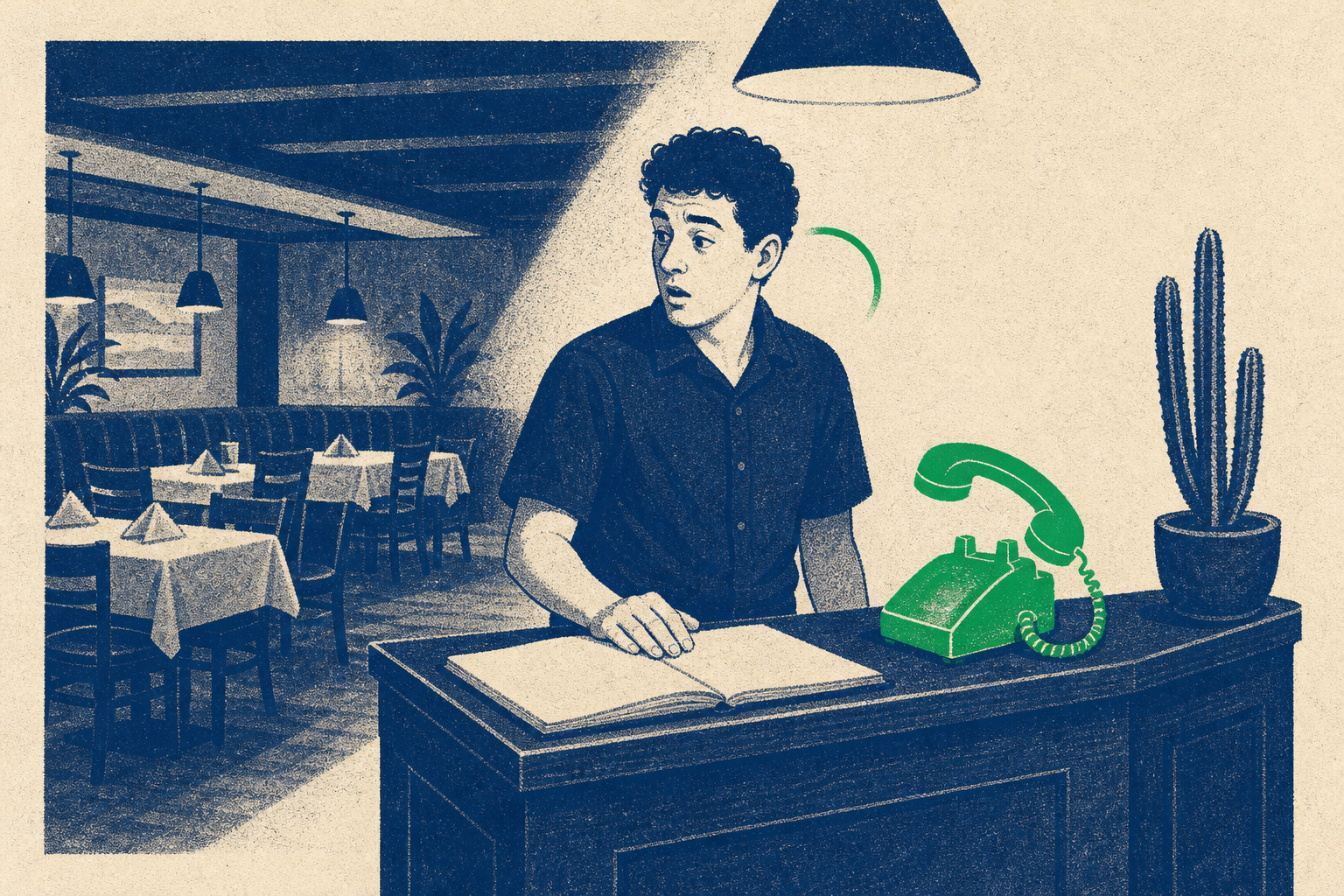

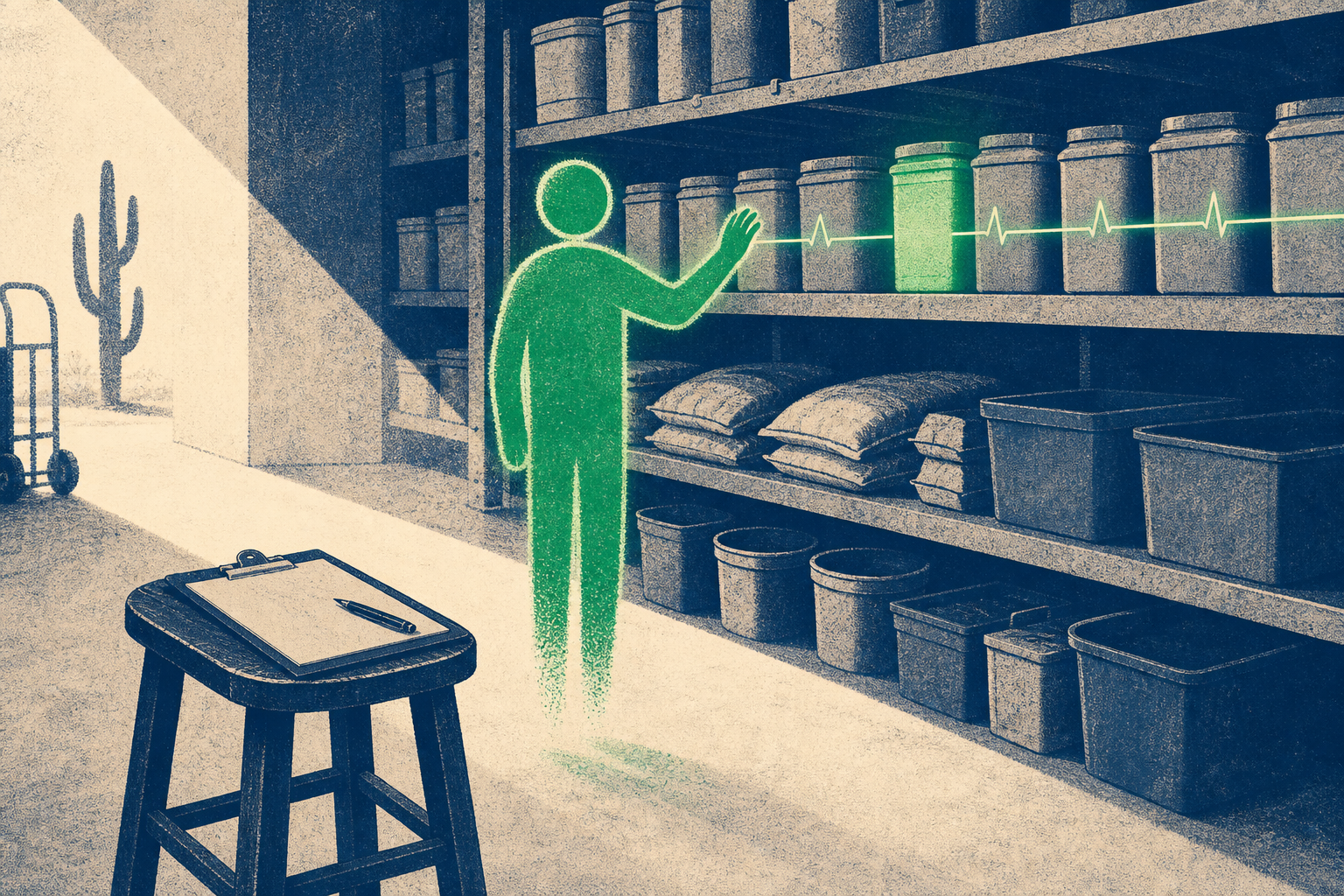
A purchasing co-op behind Skyline Chili and about 325 restaurant locations just told Fast Casual something worth stopping for. They didn't roll out an AI tool. They built an org chart with 20 AI "direct reports" and put each one to work on a specific job. One of them is named Morgan. Morgan monitors purchasing data 24 hours a day, seven days a week, flags any price movement above 5% week over week, checks whether the item is under contract, and weighs it against purchase volume before surfacing it to a human.
Morgan isn't a chatbot. She's closer to a junior analyst who never sleeps, never goes on vacation, and never forgets to run the report. That is a different thing, and the difference matters for any business that has data it checks periodically but wishes someone were watching it continuously.
What actually happened at Sky Co-op
Sky Co-op founder Tom Hannon built the system using CollectivIQ, a platform created by Buyers Edge Platform (and owned by Consolidated Concepts). CollectivIQ integrates with ArrowStream and InsideTrack, the co-op's existing data platforms, so each AI agent can pull from the same records the team already trusts.
Before this, the co-op audited contracted items every 30 to 60 days. That lag meant a pricing error could run for two or three months before anyone caught it. The trigger for building Morgan was a specific incident: one food item's contract price jumped by roughly $20 from one month to the next. An operator happened to notice about three weeks later. Three weeks of a $20 error across hundreds of locations is real money.
Hannon's framing in the piece is exactly right. "A dashboard gives me information when I go looking for it," he told Fast Casual. "A DDR has an ongoing responsibility to monitor an area of the business and surface what needs my attention."
DDR is his term: Digital Direct Report. Twenty of them now cover pricing anomalies, commodity markets, food safety incidents, distributor fill rates, transportation and freight costs, manufacturing purchasing, and market intelligence. Each one has a specific job. Morgan isn't trying to do all of it. She has one lane.
The org chart move (and why it's the whole lesson)
Most business owners think about AI as software to turn on. You subscribe, you get a feature, sometimes you use it. The Skyline story is built on a different frame entirely.
Call it the org chart move. Instead of asking "what can AI do for us," Hannon asked "what job needs to be done continuously that we are only doing periodically?" Then he staffed that job with a digital worker, gave it a name, gave it context, and held it to an analyst's standard: is the data accurate, is it finding what I asked it to find, is what it surfaces useful?
That is how you manage a person. And it turns out it's how you manage one of these systems too.
The org chart move doesn't require 325 locations. It requires one recurring task you are doing manually or checking on a schedule when you really wish someone were watching it all the time. For a restaurant, that might be food cost by category. For a home services company, it might be job completion rates by technician. For a med spa, it might be which promotions are actually filling the calendar and which are just generating inquiries that never convert.
You can't fight a calendar with a dashboard. You need someone watching the calendar.
What this means for your business
If you run a single location or a small multi-unit operation, you are not deploying 20 agents next month. That is not the point. The point is the framing shift.
Hannon is candid that it is too early to put a dollar figure on savings. He said so directly in the piece: "It's still too early for me to responsibly say, 'The DDRs have saved us X dollars.'" What he can say is that a mispriced item running six or eight weeks across multiple locations adds up fast, and catching it in days instead of weeks stops the erosion sooner.
His hypothetical is useful: a restaurant doing $1 million in sales with a 5% margin has $50,000 to the bottom line. Several hundred dollars in extra annual costs from a mispriced item is a real percentage of that. Now multiply it by how many items you buy on contract and how often your current process catches errors. That's the problem Morgan was built to solve.
The practical steps Hannon outlines translate cleanly to smaller operators. Start with a problem you can name, not "AI for my business" but one specific recurring thing that is always late, always manual, or always found too late. Build the report first so you understand what information is useful. Then make it proactive. Start with a simple rule, add context as you learn, and validate against source data before acting on anything the system flags.
Keep humans in the decision seat for now. Hannon's DDRs flag and analyze. They do not make purchasing decisions. That is the right posture for any operator early in this process. For more on what happens when AI agents start acting without that guardrail, the liability issues are real and worth reading before you build anything autonomous.
Under the hood
For the technically curious: what Hannon built is a set of AI agents with narrow, scoped contexts running on a continuous loop rather than on demand. Each agent has a defined data source (ArrowStream, InsideTrack), a defined rule set (price change threshold, contract status, volume weighting), and a defined output (surface anomalies to a human). The specialization is not a style choice. It is the architecture. A general-purpose model doesn't know that ice cream purchasing rises in July or that a 40% change on one case is noise while a 10% change across 30 cases is a problem. Context has to be built in, and context is specific to each job.
The CollectivIQ platform provides the orchestration layer. The underlying models are doing pattern detection and natural language reporting. What Hannon has that most operators don't yet is the data integration: his agents can check their own outputs against the transactional records the team already trusts, which is how you get from "the AI said so" to "we confirmed it against ArrowStream and it held up." That validation loop is not optional if you want people to act on the outputs.
Get The Root delivered weekly
We respect your privacy. Unsubscribe at any time.
The adoption challenge he mentions is worth noting too. He has given team members access and says he is "probably the group's most aggressive early adopter." This is universal. The technology is rarely the hard part. His answer is good: show someone a problem that used to take weeks to find, and now it surfaces in a day. Results convert skeptics faster than any training session. We see the same pattern in the systems we build for clients, where the moment an owner sees a real anomaly caught automatically, the conversation about adoption changes completely.
If you are thinking about where to start with continuous monitoring in your own operation, the pattern applies well beyond restaurants. We have built similar logic into practice intelligence work for healthcare clients, where the question isn't commodity pricing but appointment utilization and no-show patterns. The structure is the same: a narrow job, a defined rule, a human in the decision seat.
What to do this week
One move, honestly. Pick one report you run manually on a schedule and ask yourself: what would need to be true for this to run itself and alert me only when something is wrong? Write that down. That is your first DDR job description, and you can hand it to a developer or an AI consultant with something concrete to build toward. That is a better starting point than "we want to use AI more."
If you want to see what continuous monitoring looks like when applied to something like lead response or missed calls, the McDonald's Archy story has a related angle on what restaurants are missing when phones go unanswered.
Skip it if
You run a single-location operation with one supplier and you check invoices yourself every week before paying them. You have already built the human system that catches errors quickly. The org chart move is for people who have data they are auditing on a lag, not people who are already watching it daily. No shame in that. Keep doing what works.
The close
Hannon said something at the end of the piece that I keep coming back to. "Rather than telling someone they need to use AI, you show them something that previously took weeks to identify, and now we have the potential to see it much sooner."
That's the whole playbook. Not a strategy deck, not a pilot program memo. One thing that took weeks, now takes days. Then you tell that story to the next skeptic on your team.
What's the one thing in your business you are auditing on a 30-day lag that you wish someone were watching every day?
Sources
Frequently Asked Questions
See Where Your Business Ranks
Get a free competitive intelligence report. We analyze your website, scan your competitors, and test your AI search visibility, ready in 60 seconds.
Run My Analysis →Did this guide help?
Make our content appear first in your Google Search and AI Overview results by adding us as a preferred source.
Requires signing in to your Google account.
Add Wise Roots as a Google Preferred Source