

Your Website Is Either Working for You or Against You
Most local business websites in Phoenix are brochures. They look fine. They list a phone number. They have a contact form that nobody fills out. And they sit there, doing absolutely nothing, while your competitors are booking appointments at 11 PM on a Tuesday.
If you're hiring a web designer in 2026, the bar has moved. A site that "looks good" is table stakes. What you actually need is a site that functions as a 24/7 front desk: answering questions, qualifying visitors, and converting them into booked appointments or paying customers without you lifting a finger.
So before you sign a contract with any Phoenix web designer, here are the seven questions you need to ask, the red flags that should stop you cold, and why the smartest operators are rethinking what a website even is.
7 Questions to Ask Any Phoenix Web Designer Before You Hire Them
1. Can you show me live examples with measurable outcomes?
Not mockups. Not portfolio screenshots. Live URLs with real businesses behind them. Then ask: did that site increase leads, bookings, or revenue? Any designer worth hiring can connect their work to a business result. If they can't, you're paying for aesthetics, not outcomes.
2. How does the site handle visitors after hours?
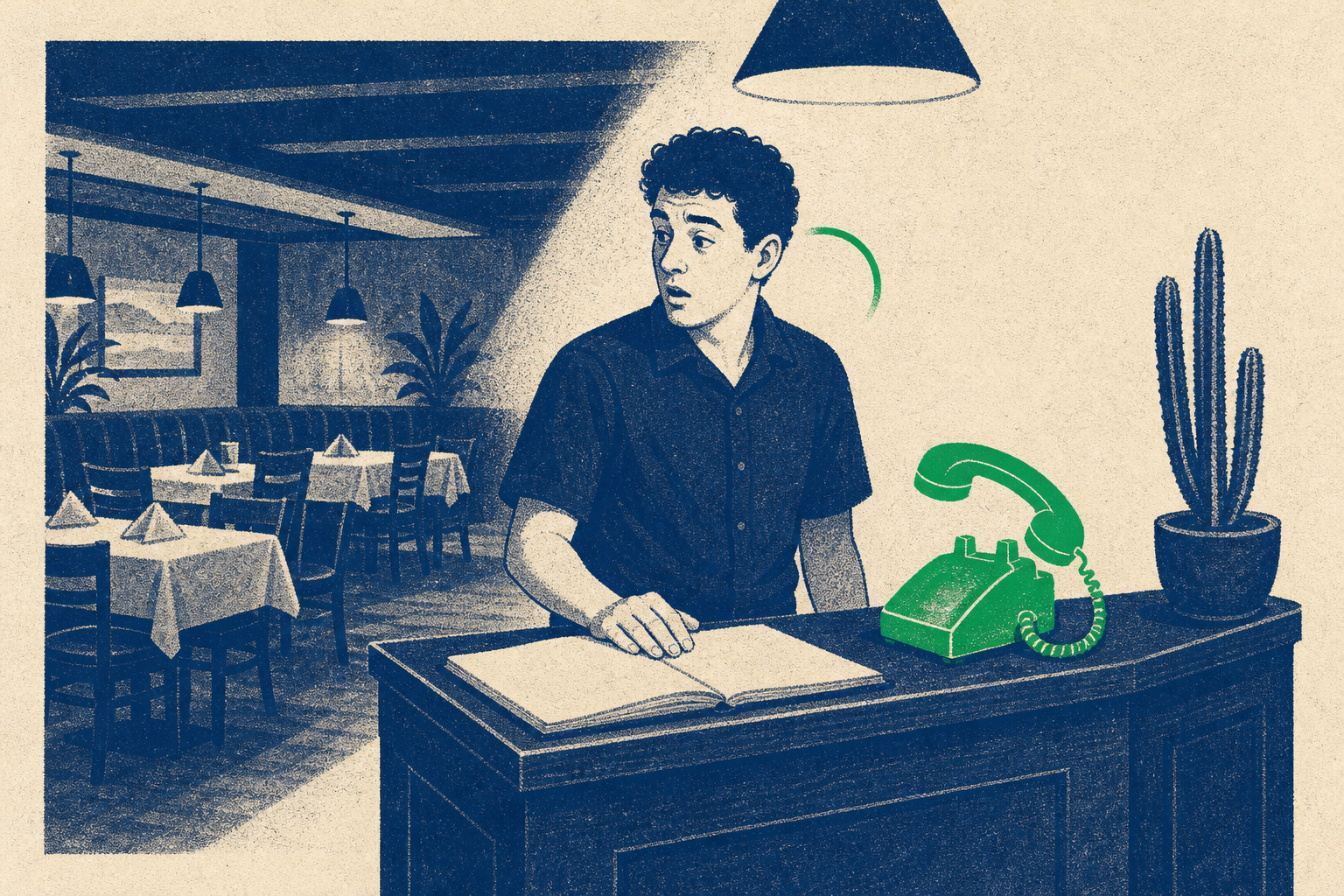
This is the question most business owners never think to ask, and it's the one that separates modern websites from digital business cards. If a potential patient lands on your dental practice site at 9 PM, what happens? Do they hit a static page and leave? Or does the site engage them, answer their questions, and offer to book an appointment?
The answer to this question alone tells you whether the designer is building for 2026 or 2016. A site paired with an AI receptionist can capture leads around the clock, long after your front desk has gone home.
3. Who owns the site when the project is done?
Some designers build on proprietary platforms that hold your site hostage. If you stop paying their monthly fee, the site goes dark. Make sure you own your domain, your content, and your code. Get this in writing before a single page is designed.
4. How does the site perform on mobile and in Google's search results?
More than 60% of local searches happen on mobile. If your site loads slowly or looks broken on a phone, you're losing visitors before they ever read a word. Ask for Core Web Vitals scores. Ask how they optimize for local search. If they look at you blankly, keep walking.
Local search visibility and your website are inseparable. A beautifully designed site that nobody finds is just an expensive hobby. It's worth reading about how trust signals affect local visibility before your next design conversation.
5. How does the site support search in AI-powered engines, not just Google?
Google is no longer the only door. ChatGPT, Perplexity, and AI Overviews are now answering questions that used to send traffic to your site directly. If your web designer has never heard of Answer Engine Optimization or Generative Engine Optimization, your new site will be invisible to a growing share of the market. This is not a future problem. It's a 2025 problem that's accelerating into 2026.
Understanding how AI answer-engine optimization works should inform how your site is structured, what questions it answers, and how your content is written.
6. What's your process for writing the content?
Design and copy are not separate projects. A great-looking site with weak, generic copy will not convert. Ask how the designer handles content: do they interview you, or do they hand you a questionnaire and paste in filler? Do they understand your industry, your customer's objections, and the specific language that builds trust in your market? If they treat copy as an afterthought, so will your visitors.
7. How will we measure success after launch?
A website is not a one-time project. It's infrastructure. Ask about tracking setup: Are Google Analytics and Google Search Console connected? Are conversion events firing correctly? Is call tracking in place? If the designer hands you a finished site and disappears, you'll have no idea whether it's actually working. Measurement has to be built in from day one.
Red Flags That Should Stop You Cold
- They show you a template and call it custom. If you can spot the same layout on five other local business sites, it's not custom. You're renting a shell, not building an asset.
- They can't explain the strategy behind the design. Every design decision should have a reason tied to visitor behavior and conversion. "It looks clean" is not a strategy.
- They don't ask about your sales process. A good web designer needs to understand how you get customers, how long the decision cycle is, and what objections your visitors bring. If they never ask, they're building blind.
- They promise first-page Google rankings. No ethical designer or SEO professional guarantees rankings. Anyone who does is either lying or selling you something that won't last.
- They build in a closed system you can't access. You should have admin access to your own website. Always. No exceptions.
- Their portfolio is all aesthetics and zero proof of results. Pretty sites that don't produce leads are expensive decorations. Ask for outcome data, not just design awards.
Why Your Website Must Work 24/7 in 2026
Get The Root delivered weekly
We respect your privacy. Unsubscribe at any time.
Here's what has changed. Your potential customers are doing research at odd hours: after the kids are in bed, during a lunch break, while sitting in a waiting room. They're asking questions. They want answers immediately. If your site can't give them those answers, and if it can't offer a simple, low-friction way to take the next step, they'll find a competitor who can.
The shift toward AI-powered search makes this even more urgent. When someone asks an AI assistant "who's the best orthodontist near me in Scottsdale," the answer comes from businesses whose websites are structured to be found, quoted, and trusted by AI systems. A static brochure site won't make that cut.
This is exactly what Smart Sites was built to solve. Smart Sites is Wise Roots' AI-powered website system built specifically for local Phoenix businesses that need a site to do more than exist. It's designed to answer visitor questions in real time, support local SEO, integrate with booking systems, and function as an active sales asset rather than a passive page. It's not a template. It's built around your business, your customers, and your market.
The Bottom Line
Choosing a web designer in Phoenix in 2026 is a strategic decision, not a creative one. You're not buying a logo or a color palette. You're building the 24/7 face of your business: the thing that either earns trust and drives action, or quietly bleeds opportunity every single day it sits idle.
Ask the hard questions. Watch for the red flags. And make sure whoever you hire understands that a great website isn't measured by how it looks on a laptop. It's measured by how many appointments it books while you're sleeping.
If you want to see what a site built for outcomes looks like, start with a free strategy session. No pitch, no pressure. Just a clear look at what your current site is costing you and what a smarter one could do instead.
Frequently Asked Questions
See Where Your Business Ranks
Get a free competitive intelligence report. We analyze your website, scan your competitors, and test your AI search visibility, ready in 60 seconds.
Run My Analysis →Did this guide help?
Make our content appear first in your Google Search and AI Overview results by adding us as a preferred source.
Requires signing in to your Google account.
Add Wise Roots as a Google Preferred Source