

On October 27, 2026, Search Engine Land reported that Semrush confirmed manipulated Google results are feeding corrupted data into SEO tools. Not a rumor, not a forum thread. The company confirmed it. The short version: bad actors have figured out how to poison what Google serves up, and the tools that read Google to tell you where you rank and what keywords to target are reading the wrong thing.
If you pay for Semrush, Ahrefs, Moz, or any similar tool, some of your data this quarter may have been quietly wrong. Not dramatically wrong, probably. Just wrong enough to send you in the wrong direction.
What actually happened
The source page was unavailable when I went to pull the full article, so I'm working from what Search Engine Land reported in summary: Semrush confirmed that manipulated, or "poisoned," Google search results are affecting the accuracy of SEO tools that rely on Google data. I'll say plainly that I don't have the granular technical details of exactly how this manifests, because I won't invent them. What I do know, from the confirmation itself, is that this is real, it's acknowledged by one of the biggest names in SEO software, and it means the rankings and keyword data you're pulling have a contamination problem.
That's enough to act on.
The "clean water from a dirty tap" rule
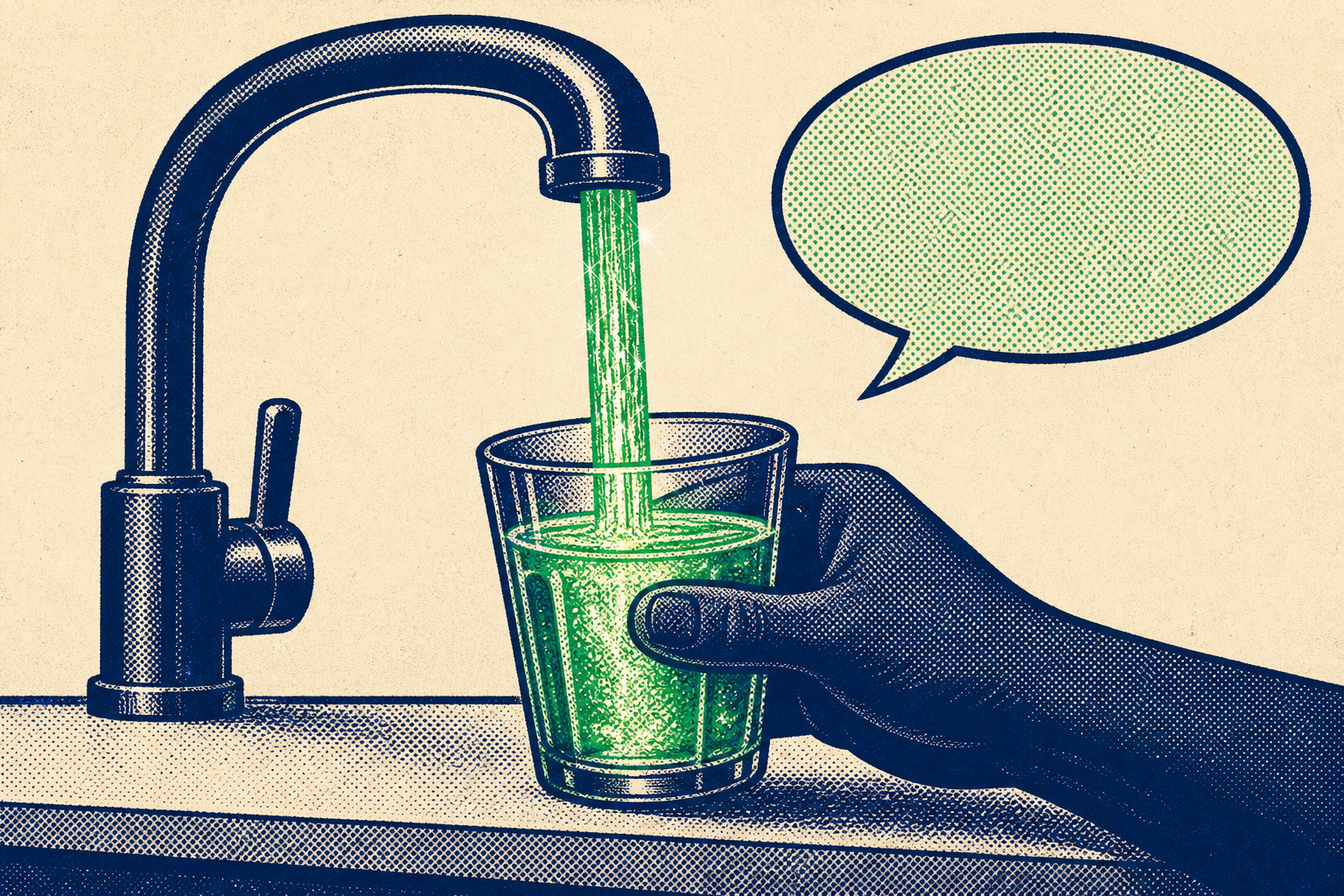
Here's the principle worth naming: clean water from a dirty tap. Your SEO tool is a tap. Google is the reservoir. If someone gets into the reservoir and messes with what's in it, the water coming out of your tap looks fine, it runs clear, the dashboard says everything is normal. But you're still drinking poison.
SEO tools don't independently verify what they're reading. They trust the source. Always have. When the source gets manipulated, every report, every ranking, every "you jumped from position 8 to position 4" notification is suspect. Use this name when you talk to your marketing person or your agency: clean water from a dirty tap. Ask them what they're doing about it. Their answer will tell you a lot.
This isn't the first time Google's data layer has had integrity problems. Go back to the years when click farms were actively distorting search volume data, and tools were reporting keyword demand that wasn't real. The platforms patched it eventually. They always do. But "eventually" is not a great planning horizon when you're spending money on SEO this month.
What it means for your business
Let me be specific about who this actually bites.
If you have someone, in-house or at an agency, pulling weekly rank tracking reports and making decisions about which pages to update, which keywords to target, or whether your SEO is working, those decisions have been running on potentially contaminated inputs. Not all of them, not necessarily your most important ones, but some. And you don't know which ones.
For a dental practice trying to rank for "Scottsdale orthodontist," for a restaurant watching whether "best birria tacos Phoenix" is moving, for a home services company tracking "AC repair Tempe," the stakes of a wrong ranking signal are real. You might have deprioritized a page that was actually performing. You might have doubled down on a keyword that wasn't sending real traffic. The tool told you what it saw. It just saw a distorted picture.
This also matters in a week when AI Overviews are already reshaping what "ranking" even means for buying searches. The traditional rank tracker was already under pressure. This is one more reason not to let a single number from a single tool drive your entire strategy.
Under the hood
For the more technical reader: SEO tools like Semrush build their databases by crawling Google search results at scale, scraping rankings, featured snippets, related searches, and other signals to populate their keyword and ranking databases. They are not getting a clean API feed from Google with verified data. They are reading what Google shows, the same way a browser would, just at industrial volume.
When bad actors find ways to inject manipulated results into what Google serves, whether through sophisticated spam indexing, result injection, or other means, those manipulated results get ingested by the tools right alongside legitimate ones. The tool has no easy way to flag the difference. It logs what it sees. This is a structural vulnerability in how third-party SEO data has always worked, not a failure unique to Semrush. They deserve credit for confirming it rather than going quiet.
The fix isn't simple. It requires Google to clean up the source data and for tool providers to build better anomaly detection. Neither of those happens on a schedule you control.
What to do this week
A few concrete moves, none of which require you to panic.
- Pull your own traffic data from Google Search Console. This is first-party. Google is giving you your own site's actual impressions and clicks, not an inferred ranking scraped from a potentially contaminated result set. If your rank tracker says you're in position 3 but Search Console shows impressions tanking, believe Search Console.
- Cross-reference before acting. Any SEO decision that came from a single tool report this quarter, especially around keyword rankings, is worth a second look against Search Console and Google Analytics. If the stories match, you're probably fine. If they don't, dig.
- Ask your agency or SEO provider what they're doing. Not to put them on the spot, but because the good ones already know about this and have a protocol. The ones who look confused when you bring it up are the ones you should be more worried about. Your local SEO strategy should not rest entirely on a single data source that just admitted a contamination problem.
- Watch for a Semrush or industry update. When a tool acknowledges a problem this publicly, a fix or at least a detailed explanation usually follows. Keep an eye on Search Engine Land and Semrush's own blog for what they say next.
Skip it if
Get The Root delivered weekly
We respect your privacy. Unsubscribe at any time.
You don't use SEO tools at all, you've never looked at a rank tracking report, and you get all your business from referrals or paid ads. This one isn't for you. Come back when the next thing lands. Everyone else, this is worth five minutes of your attention this week.
In the auction world, we had a saying about provenance. An item is only as good as the documentation behind it. A table that came from George Washington's Mount Vernon estate is worth something very different from one that "might have" come from there, based on a description written by someone who was guessing. Your keyword rankings are only as good as the data behind them. Right now, the provenance is in question.
Don't throw out your SEO tools. Just stop treating their output like gospel. Garbage in, garbage out is one of the oldest rules in computing, and it doesn't take a hack to apply it. Sometimes it just takes a poisoned reservoir upstream and a tap that doesn't know the difference.
So let me ask you the same thing I'd ask a client sitting across from me: if you found out your inventory system had been reading counts wrong for a quarter, what's the first thing you'd do? You'd audit it. Same move here.
Sources
Frequently Asked Questions
See Where Your Business Ranks
Get a free competitive intelligence report. We analyze your website, scan your competitors, and test your AI search visibility, ready in 60 seconds.
Run My Analysis →Did this guide help?
Make our content appear first in your Google Search and AI Overview results by adding us as a preferred source.
Requires signing in to your Google account.
Add Wise Roots as a Google Preferred Source