
I was sitting across from the owner of a Scottsdale restaurant last spring, and I pulled up a map on my laptop. "See this parking lot?" I said, pointing to one of his direct competitors about a half mile north. "Every device that walked in there in the last 30 days — we can target with your ad right now."
He stared at the screen for a long moment. Then he said: "That's legal?"
Yes. It's legal. It's called geofencing, and it's one of the most underutilized tools in local restaurant marketing. While your competition is blasting mass-market display ads into the void, you can be showing your offer to people who were literally eating at their tables last week.
Here's how it works, and how to use it right in the Scottsdale market.
What Geofencing Actually Is (No Jargon)
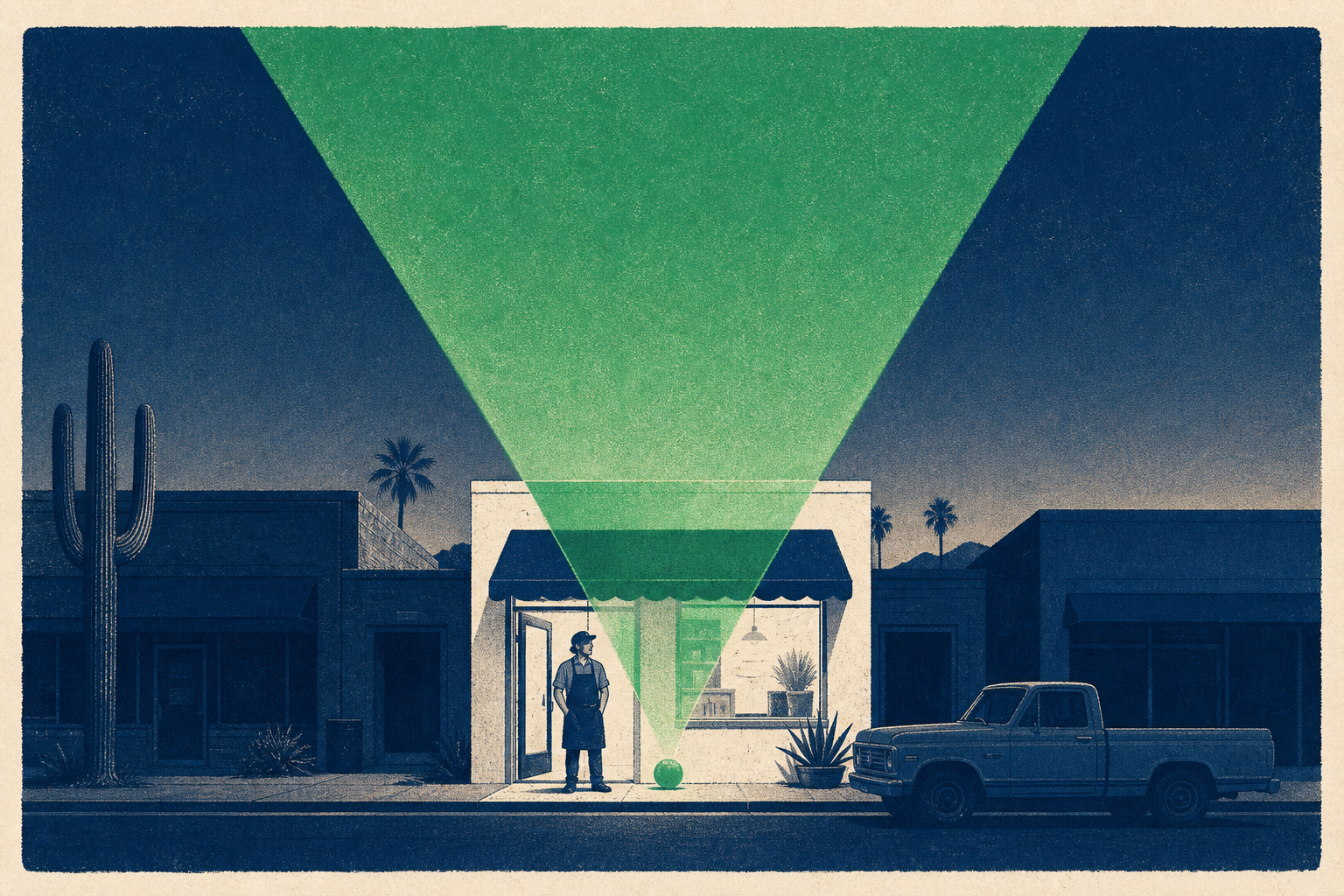
A geofence is a virtual boundary drawn around a physical location. When someone with a smartphone enters that boundary, their device ID gets captured. You can then serve ads to that device for up to 30 days after they left, regardless of where they go or what app they're using.
You're not hacking anyone's phone. You're using the same location data that dozens of apps on every person's phone are collecting and selling to ad networks. Geofencing buys access to that data and turns it into a targeting list. The difference between geofencing and traditional display advertising is precision. Instead of targeting "adults 25 to 54 in Scottsdale," you're targeting "people who visited this specific location in the last 30 days." That's a fundamentally different level of intent signal.
5 Geofencing Tactics That Work for Scottsdale Restaurants
1. Competitor locations. This is the obvious one and it works. Draw a fence around your top three competitors. Capture every device that visits them. Serve them your ad with a compelling offer within 24 to 48 hours. They're already in the habit of dining out in your neighborhood. You just need to give them a reason to try you instead.
2. Event venues. Scottsdale is an event town. Talking Stick Resort Arena, Salt River Fields, Scottsdale Stadium, the Fashion Square events calendar, Desert Ridge concerts. Every person who attends an event is in a social, hungry, spending mindset. A well-timed ad from a nearby restaurant that says "You just left the game, we're 4 minutes away, here's your offer" is not intrusive. It's relevant.
3. Neighborhood targeting by ZIP. Not all Scottsdale ZIP codes behave the same. 85254 skews family dining and mid-week. 85251 skews nightlife and weekend. 85255 skews high-income and special occasion. Build separate fence campaigns for the neighborhoods where your ideal diner lives, not just where they visit. You're catching them at home before they make a decision about where to go tonight.
4. Hotel corridors. Old Town Scottsdale has a dense hotel concentration, and those guests are making dining decisions every single day without strong local knowledge. The Scottsdale Marriott, the W, Hotel Valley Ho, Andaz. Fence the hotels. Target tourists who are already in your trade area and actively looking for somewhere to eat. A well-placed ad with a photo of your best dish and a clear call to action wins this audience more often than not.
5. Retargeting past visitors. The most overlooked tactic: your own location. Fence your own restaurant. Every device that visits you gets added to a retargeting pool. You can bring those guests back with a specific offer, a new menu feature, or a weeknight promotion. These are warm audiences who already know you. They convert at a significantly higher rate than cold traffic.
What Makes a Geofencing Ad Actually Work
Precision targeting gets the ad in front of the right person. The creative is what makes them act.
For restaurants, three things drive response: urgency, specificity, and an offer with real value. "Visit us this week" is not urgent. "Half-price happy hour ends Sunday" is urgent. "Great food in Scottsdale" is not specific. "Wood-fired branzino, $38, sourced locally, serving tonight until 9" is specific. A generic discount is not compelling. A first-time guest offer with a real dollar value tied to a visit is compelling.
The ad creative needs to match the context of the targeting. If you're fencing a competitor, the tone should be confident and comparative. If you're fencing an event venue, it should be immediate and location-aware. If you're retargeting past visitors, it should feel like a personal note from the restaurant, not a broadcast ad.
Get The Root delivered weekly
We respect your privacy. Unsubscribe at any time.
Results in the Real World
I've run geofencing campaigns for Scottsdale restaurant clients including The Porch and Chula Seafood. The pattern I see consistently: geofencing produces higher foot traffic lift per dollar spent than almost any other digital channel when the creative is right and the fence is drawn strategically. The cost-per-visit metric, when tracked cleanly with before-and-after foot traffic data, tends to outperform traditional display by a wide margin in competitive dining markets.
The Scottsdale restaurant market is crowded. Dozens of strong concepts are competing for the same diners every weekend. The operators who win consistently are not outspending their competition. They're out-targeting them. They know who their customer is, where that customer goes before they decide where to eat, and they show up there with the right message at the right time.
Geofencing, done right, is the most direct way to execute that strategy at scale.
The Cost Reality
Geofencing campaigns for local restaurants in the Scottsdale market typically run $800 to $2,500 per month depending on the number of fences, the audience size, and the creative volume. That is significantly less than most restaurants spend on PR or print, with far more measurable return. You can see impression counts, click-through rates, and with proper tracking, actual foot traffic lift. Nothing in traditional media gives you that kind of accountability.
Want to see which of your competitors' customers we can target right now? I'll pull a competitive intelligence brief for your restaurant: which locations to fence, what the audience size looks like, and what a 30-day campaign would cost.
See Where Your Business Ranks
Get a free competitive intelligence report. We analyze your website, scan your competitors, and test your AI search visibility, ready in 60 seconds.
Run My Analysis →Did this guide help?
Make our content appear first in your Google Search and AI Overview results by adding us as a preferred source.
Requires signing in to your Google account.
Add Wise Roots as a Google Preferred Source