
Three separate stories landed this week, and I don't think they're separate at all. McDonald's and Burger King are reversing course on AI at the counter because customers, in the words of Burger King President Tom Curtis, want "a friendly face." Restaurants across the country are going viral by posting handwritten signs pledging no AI in their marketing. And a Gartner survey of 3,566 customers found that 87 percent of consumers still consider human access essential even when they're fine using AI for simple tasks.
That's not three stories about AI skepticism. That's one signal, repeated three times, in three different formats. Customers have developed a specific reflex: when they sense AI is the face of a business, they pull back. And they reward the business that isn't.
What actually happened this week
Let me lay out the record. According to a Wall Street Journal report covered by Yahoo Finance, McDonald's, Burger King, Starbucks, and Wendy's are all preparing new initiatives to put humans back at the center of the guest experience. The changes include "energetic greetings," making sure counter staff are available for complaints, and rethinking in-store layouts to emphasize human-to-human interactions. Curtis's quote to the Journal is worth reading again slowly: "We have to lean in to that because that's evaporating in the fast food space." The guy running Burger King is saying the industry automated too far, and now it's a competitive advantage to have a person in the room.
Industry newsletter The Prep put it plainly in an August commentary cited in the piece: "Technology can improve prep, reduce waste and eliminate administrative work, but removing human interaction from the guest experience risks stripping away the product itself: connection."
Separately, Futurism reported on September 19 that restaurants are going viral, some with hundreds of thousands of likes, by posting photos of their owners and chefs holding handwritten notes that say some version of "We will not be using any AI to promote ourselves." Phoenix's own Niu Mama is on that list, alongside Brooklyn's L&B Spumoni Gardens and "Chopped" champion Nikko Cagalanan. One commenter's reply has become the accidental slogan for the whole movement: "This is how you catch a fish."
The AI food imagery problem is real. CT Insider reported on the concerns Connecticut food experts have raised about AI-generated menu photos. The New Yorker summed up the consumer read on those images: "The AI images are a sort of shorthand for saying, 'Yes, we serve food, but it is slop, just like the photos we use to market it.'" That's brutal. And it's accurate.
Meanwhile, the FINCHANNEL piece on Gartner's February-March 2026 survey of 3,566 customers found that half said generative AI had made customer service easier. Half. The other signal in that same data: 87 percent still called human access essential. A separate Zendesk and YouGov survey of roughly 10,000 consumers across ten countries found 52 percent were comfortable using personal AI assistants for simple tasks, and 84 percent still wanted a human available when things got complicated.
The principle, and what to call it
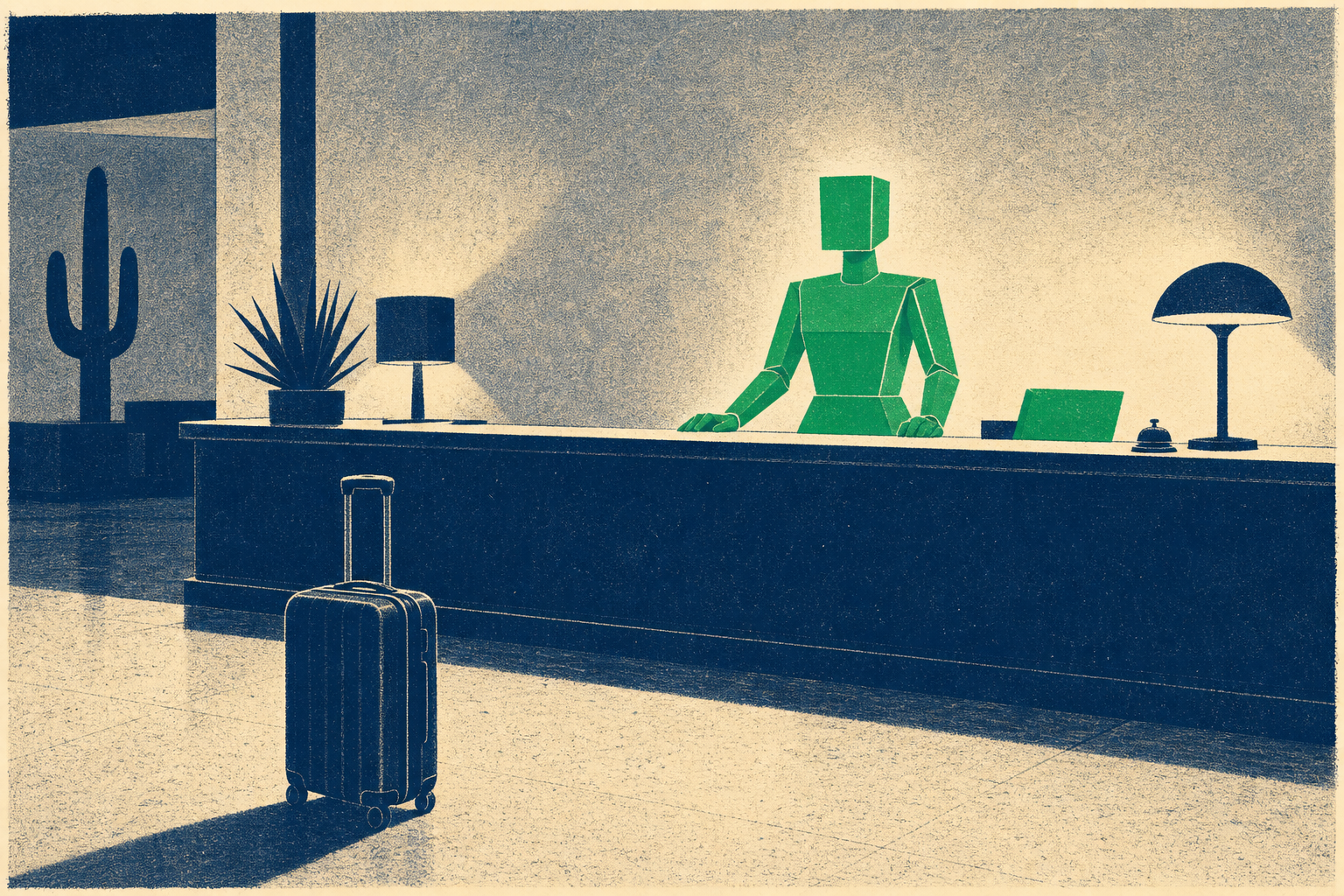
Here's the idea I want you to be able to repeat tomorrow, because it's the thing that makes all three stories click into place. I'm calling it the Front Counter Rule: AI belongs behind the counter, not in front of it.
The front counter is anything a customer sees, hears, or interacts with first. Your menu photos. Your social media posts. Your phone system. Your front desk greeting. Your Google Business profile photos. The face of your business.
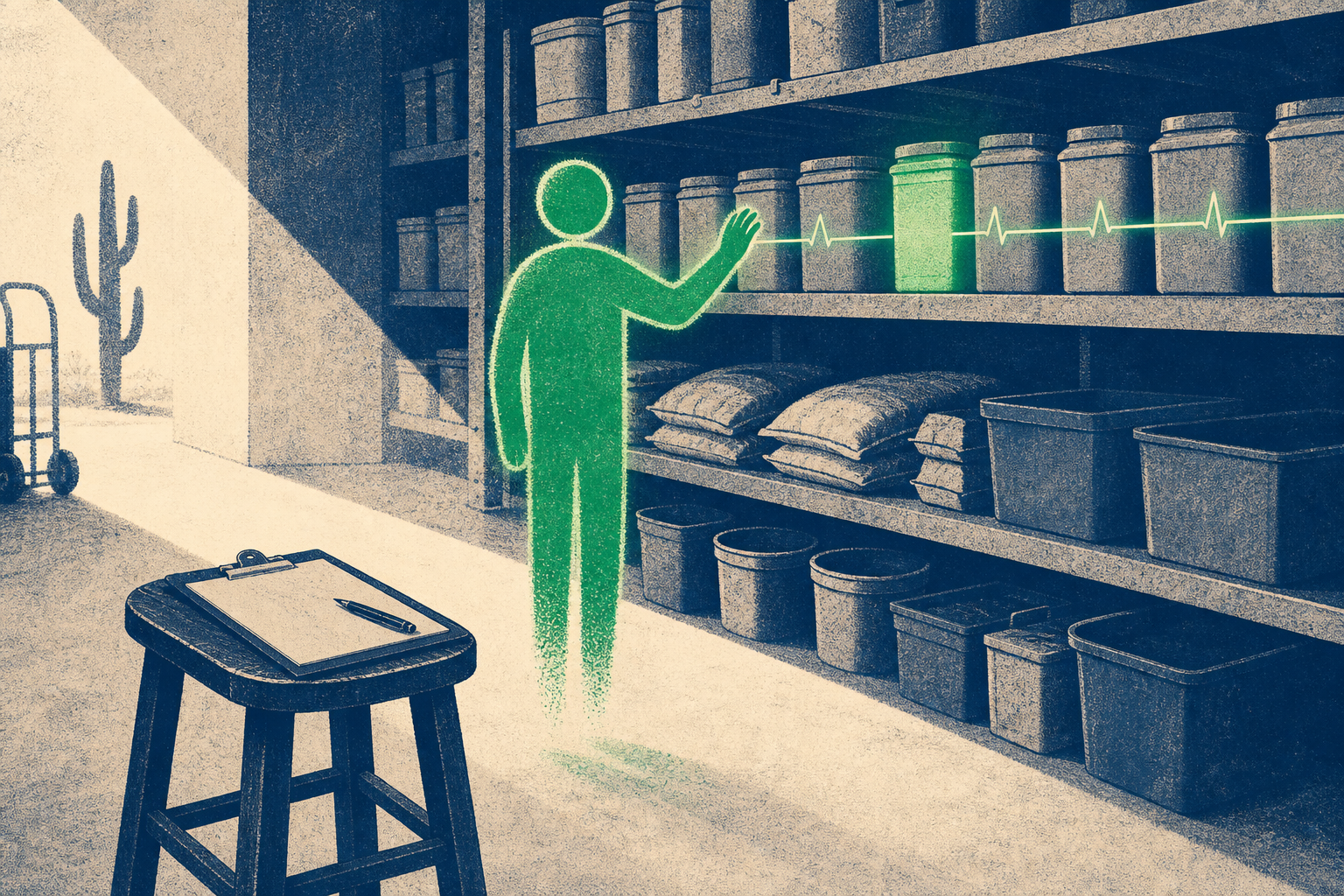
Behind the counter is everything else. Your scheduling logic. Your order routing. Your inventory management. Your marketing reporting. Your email sequences after someone books. Your prep and waste reduction. This is where AI saves you real money without costing you trust.
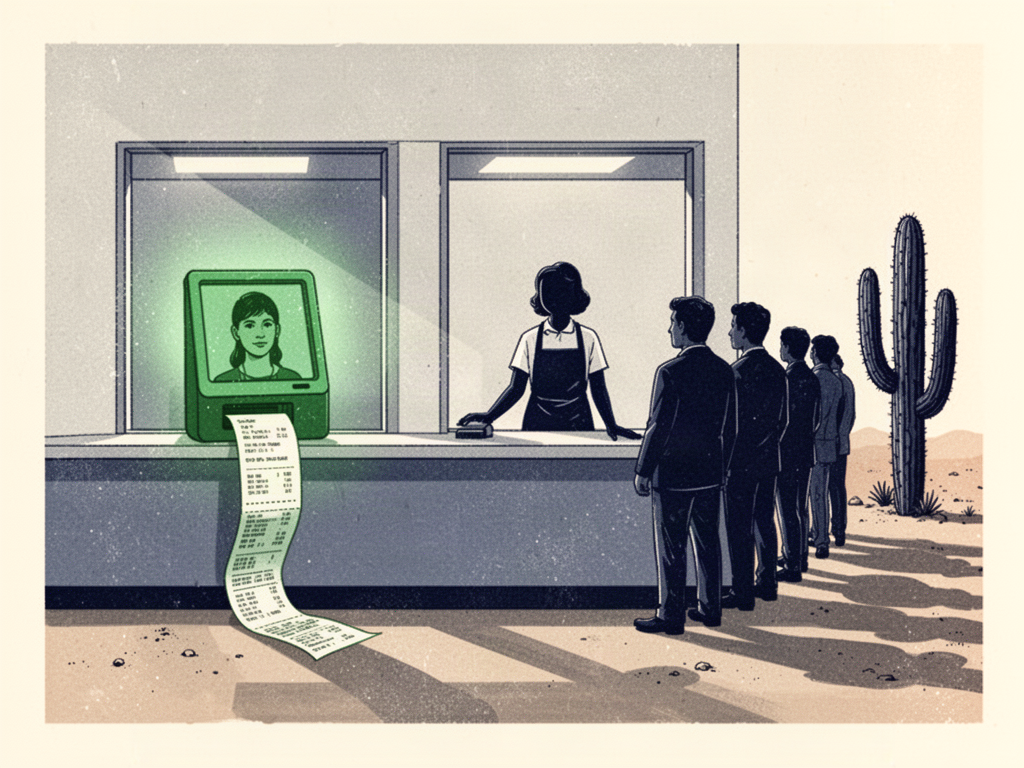
The mistake every chain made, and the one small businesses are making right now, is that they put AI where customers can see it. Kiosks replaced cashiers. AI voices replaced drive-thru workers. Generated photos replaced real food photography. And customers noticed, and they named it, and now they're actively rewarding the businesses that reverse course.
Portillo's, the Chicago-based hot-dog chain, figured this out early. According to the Yahoo Finance piece, they took a Chick-fil-A approach to their drive-thru, sending staff outside to take orders, and they brought in baristas specifically to teach employees how to strike up real conversations. That's a company that understood the Front Counter Rule before everyone else did.
What this means for your business
If you run a restaurant, a med spa, a dental practice, a home service company, or any local business where a customer shows up in person or calls you on the phone, this week's news matters to you right now. Not in theory.
Take a look at your customer-facing surface area. Check your social media posts from the last ninety days. Are your food, service, or product images obviously generated? Do your captions sound like a human wrote them? When someone calls your office, do they hear a robotic menu tree first, or a person? When someone fills out a form on your site, what's the first thing they get back?
I've written about this tension before, specifically how AI is simultaneously filling seats and killing appetites in the restaurant world, in an earlier piece worth reading alongside this one. The short version is that AI can help a customer find you, but it can also make them not want to walk in the door once they do.
The businesses winning right now are not the ones who abandoned AI. They're the ones who applied the Front Counter Rule. Use AI to run your operations, surface insights, handle repetitive back-office tasks, and power your discovery (local SEO, content, review responses). Keep a human face on anything a customer encounters before they've decided to trust you.
By the way, iHeartMedia is already selling ad inventory under the label "Guaranteed Human" because they spotted this same reflex in their own audience data. When a media company with that kind of scale sees a market signal and builds a product category around it, you should probably believe the signal is real.
Under the hood
For the technically curious: the reason this is happening now, and not three years ago when the kiosks rolled out, is that generative AI made the "AI face" visible in a way that automation never was before. A kiosk is a kiosk. But an AI-generated photo of food that looks like "alien larva" (Futurism's description, not mine) or a chatbot that fails on question two is immediately recognizable as generated, and it reads as a signal about quality, care, and authenticity that a touchscreen never sent.
The customer's brain is doing pattern matching. "This business used AI here, which means they cut corners here, which means what else did they cut corners on?" It's not a rational audit. It's a reflex. And once a reflex forms at scale, it becomes a market force. That's what we're watching happen in real time this week.
The practical implication for anyone building AI into their operations: the ROI on AI is highest where customers can't see it. Scheduling, reporting, content drafting (that a human edits and publishes), lead routing, unanswered-call capture via an AI receptionist working after hours. These are the applications that save you money without triggering the reflex. The full picture of what's real versus hype in AI marketing automation is worth a read if you want to sort this out for your own situation.
Get The Root delivered weekly
We respect your privacy. Unsubscribe at any time.
What to do this week
- Audit your front counter. Pull up your last ten social posts, your Google Business photos, and your most recent marketing email. Ask someone who doesn't know your business if anything looks or sounds generated. If they hesitate, you have your answer.
- Check your phone system. If a customer calls during business hours and the first thing they hear is a menu tree with no option to speak to a person quickly, that's a front counter problem the Front Counter Rule flags immediately.
- If you're using AI-generated images anywhere customer-facing, replace them with real photos this week. Your phone camera and decent lighting will beat generated imagery in customer trust every time, and as this week proves, the handwritten pledge not to use AI is literally going viral.
- Look at your back counter. That's where AI actually earns its keep: scheduling, follow-up sequences, reporting, content research. If you haven't put AI to work there yet, that's the opportunity this week's news points toward.
Skip it if
You run a pure B2B operation where your customers never see your marketing, your phone system is already staffed by humans during every business hour, and you have never once been tempted to use a generated image in your materials. You're already living the Front Counter Rule without knowing it. Move on.
One more thing
I ran auctions for twenty years. Every estate sale has a moment where someone picks up an object, squints at it, and puts it back down. They can't always say exactly why. The finish is off, or the weight is wrong, or something about it just doesn't feel right. Customers are doing the same thing with AI-forward businesses right now. They're picking it up, feeling something, and putting it back down.
The businesses that are winning are the ones giving them something that feels right. A handwritten sign. A staff member who comes out to the drive-thru lane. A menu photo that looks like someone actually made the food.
The brands with the biggest AI budgets just learned what every small restaurant owner already knew: hospitality is the product, and you can't automate the part people came for.
So the question I'd actually ask a peer right now is this: if a customer walked through your front door today, at what point would they notice that AI was involved in your business? And would that moment make them feel better about you, or worse?
Sources
- Burger King and McDonald's are reversing its course on AI as customers crave human connection, Yahoo Finance, September 16, 2026
- Restaurants Are Going Viral by Holding Up Handwritten Signs Pledging Not to Use AI Foodslop Posters, Futurism, September 19, 2026
- Customer Backlash Is Growing as Companies Replace Human Support With AI, FINCHANNEL, September 18, 2026
- AI food images are taking over restaurant menus. Connecticut experts have concerns, CT Insider
- Sentiment Shift: The More People Learn About AI, the Less They Like It, Fast Company
Frequently Asked Questions
See Where Your Business Ranks
Get a free competitive intelligence report. We analyze your website, scan your competitors, and test your AI search visibility, ready in 60 seconds.
Run My Analysis →Did this guide help?
Make our content appear first in your Google Search and AI Overview results by adding us as a preferred source.
Requires signing in to your Google account.
Add Wise Roots as a Google Preferred Source