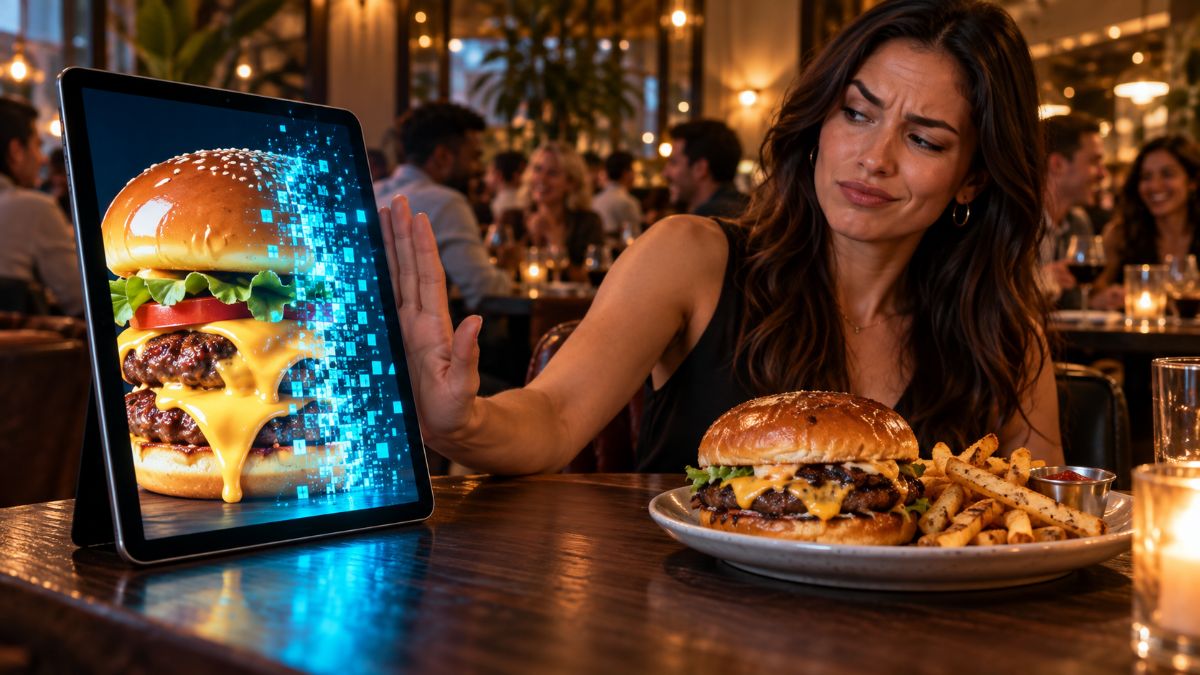
Four separate stories dropped this week about restaurants and AI. Nobody connected them. I will.
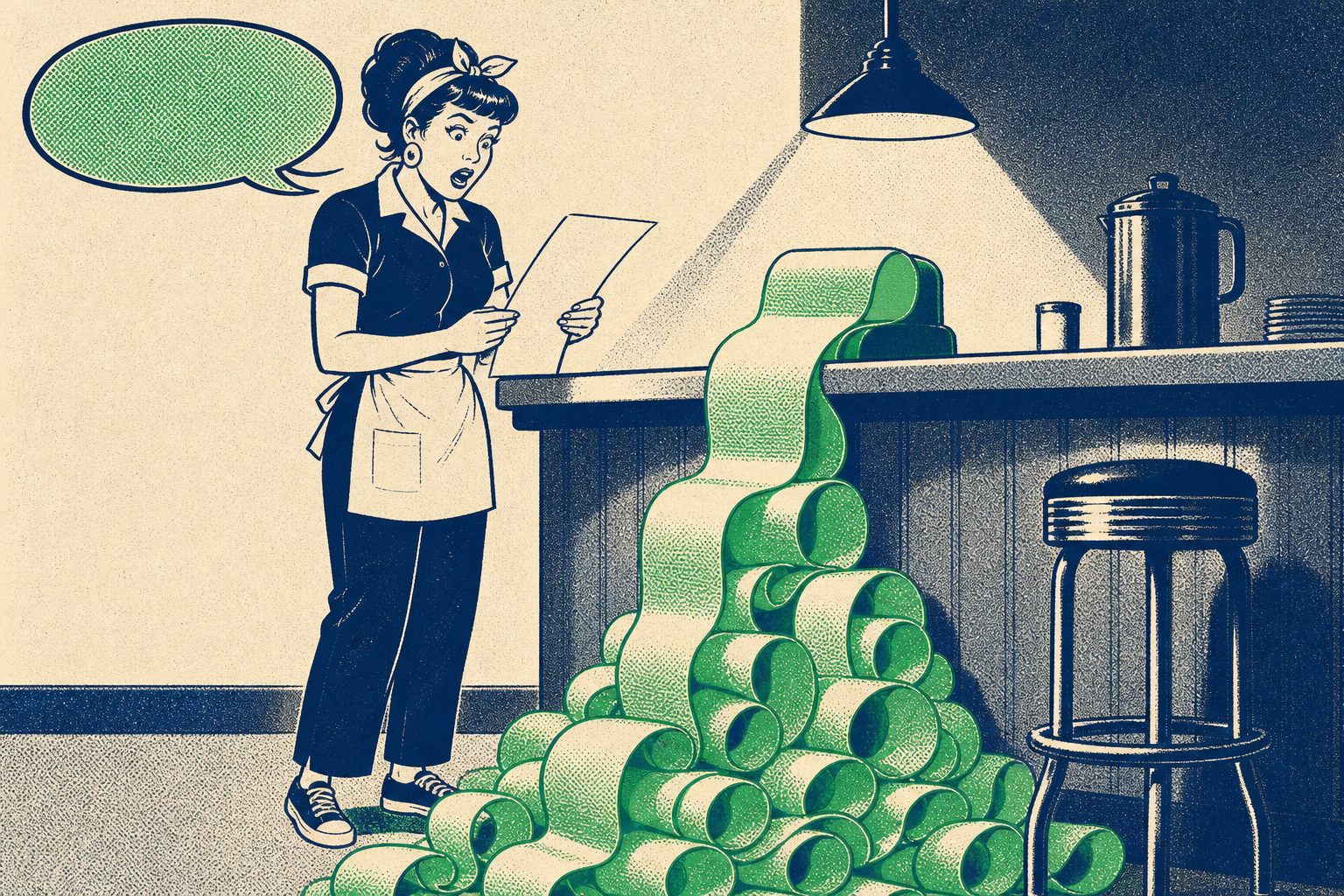
On one side: customers are openly revolting against AI-generated food images. The Cool Down reported on September 12 that diners say AI menu photos make food look like "leather belts," and a 2024 study by University of Oxford experimental psychologist Charles Spence found that once diners know an image is AI-generated, they find it less appealing, even if they liked it before. Scripps News documented customers saying that fake promotional pictures signal a "lack of pride or shortcuts in food preparation and quality." A coffee shop owner used AI to make a menu poster and got flooded with angry DMs. Yahoo ran a piece with the headline calling it "nauseating horror." That is four stories, one week, one direction.
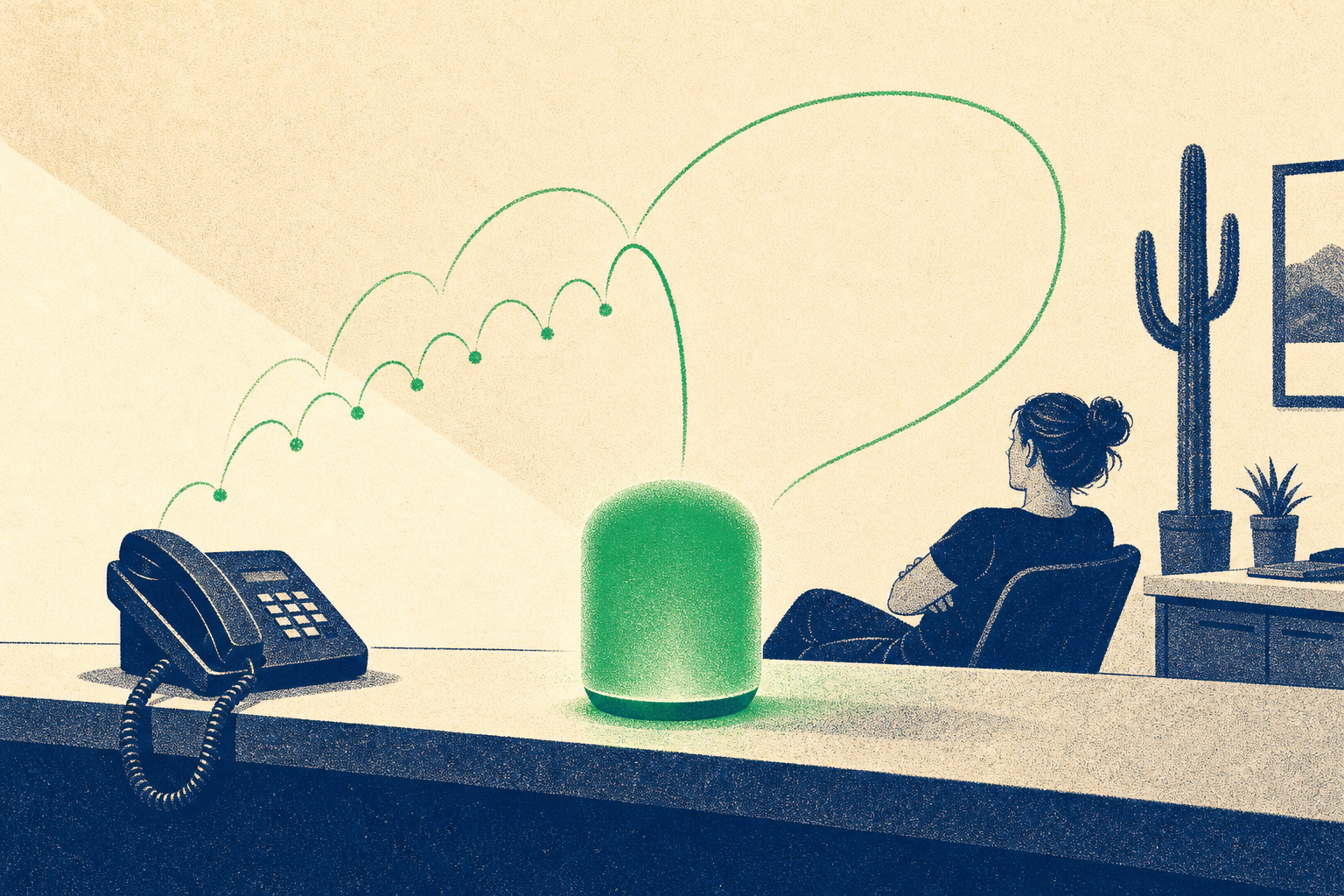
On the other side: PYMNTS reported on September 14 that OpenTable's integrations with AI models drove 17 times more seated diners year over year for restaurant operators, and that diners reached through those AI tools spent on average 20% more than diners reached through other channels. The integrations include Google Search, Maps, Gemini, ChatGPT, Copilot, Perplexity, and Amazon Alexa+. Seventeen times the diners. Twenty percent more per check.
Nobody is writing about both findings in the same piece because one is a marketing story and one is a technology story. They are actually the same story.
The signal customers are sending
Here is what I think is happening. Customers are not anti-AI. They are anti-deception. When AI works in the background to surface the right restaurant at the right moment, customers are not just fine with it, they reward it with a bigger check. When AI shows up in your creative work, in the photo of your risotto or the copy on your Instagram post, customers feel a breach of trust. Not because they hate computers, but because they came to eat food made by humans, and a fake image of that food is the first signal that maybe the whole experience is a shortcut.
The Oxford study Spence ran is the clearest data point here. Diners liked the AI images just fine until someone told them what made them. The reveal is the problem. The moment your customer knows a machine generated the picture of your $34 pasta, they start wondering what else is a machine.
I'd call this the "behind the curtain" rule: customers will pay a premium for the magic show, but they do not want to see the rigging.
What OpenTable's numbers actually mean
The OpenTable results are worth reading carefully, because the mechanism matters. According to the PYMNTS report, OpenTable's AI Concierge is helping more than 500,000 monthly active global users discover restaurants through natural conversations. Its voice AI booked 3 million diners in 2026, often after operating hours, without pulling host staff off the floor. Its Table Automations tool is saving operators 4.5 hours per month by automatically adjusting table minimums based on live demand. Its Turn Time and Availability Insights are recovering 39 minutes of reservable time per shift.
None of that is visible to your customer. That is the point. The AI doing the work here is matching intent to availability, surfacing your restaurant when someone asks ChatGPT where to take a client for a good meal in your neighborhood, booking the reservation while your host is seating a party of six. The customer's experience is seamless discovery and a smooth booking. They never see the engine.
That is a very different use of AI than generating a picture of a burger and posting it on Tuesday.
If you want to understand how to show up when someone asks an AI assistant for a restaurant recommendation, my piece on AI answer-engine optimization walks through the mechanics of how that visibility actually works. It applies directly to this.
The behind-the-curtain rule, applied
So here is the practical version, said plainly enough that you could repeat it to your business partner tonight.
Use AI to get discovered. Keep a human hand on anything a customer will look at.
AI belongs in your reservation system, your search presence, your review response workflow, your table management, your after-hours booking, and the backend personalization that helps you remember a guest prefers a booth and does not eat shellfish. All of that is invisible to the customer and it makes their experience better.
AI does not belong in your menu photography, your social posts, or your promotional copy. Not because the technology cannot do it, but because the moment a customer suspects it, you lose something that is very hard to get back. The Scripps News reporting captures it well: diners say fake images signal shortcuts. And in a restaurant, a customer who thinks you cut corners on the photo is already wondering whether you cut corners on the food.
Deloitte reported in March that about 70% of restaurant operators are either actively using or piloting AI to improve loyalty programs and employee workflows. That number is going to keep climbing. The operators who understand the behind-the-curtain rule will pull ahead of the ones who are just trying AI on everything and seeing what sticks.
Under the hood
For the technically curious: the reason AI food images fail at texture is not a prompt problem, it is a training data problem. Food photography is a tactile medium. The crispness of a crust, the weave of pulled pork, the wet shimmer of a fresh oyster, these are things a human photographer captures with lighting and lens choice specifically because texture is how the brain decides whether food is safe and appetizing. Current generative image models optimize for visual plausibility at the image level, not for the micro-texture cues that trigger appetite. The result is food that looks like food in the way a wax apple looks like an apple. Your eye knows immediately, even if your brain takes a second to say why.
OpenTable's AI layer, by contrast, is working on a structured data problem: matching reservation intent signals from AI assistants (ChatGPT, Gemini, Alexa+) to real-time availability. That is a much cleaner task for current AI. It does not need to fool anyone. It just needs to connect the right person to the right table. The 20% spend lift likely reflects intent quality: someone who found you by asking an AI assistant for a specific type of restaurant is already more committed than someone who clicked a generic ad.
Getting your restaurant structured correctly for that kind of AI-driven discovery is a content and local SEO problem. This piece on AI-optimized content for local visibility covers how to set that foundation up.
Get The Root delivered weekly
We respect your privacy. Unsubscribe at any time.
What to do this week
Here are three concrete moves, in order of priority.
- Audit your AI content exposure. Pull up your Google Business Profile, your menu listings on third-party platforms, and your last 20 social posts. Flag anything that is AI-generated imagery. Replace it with real photos, even phone photos shot in good natural light. This is not optional anymore.
- Check whether you are showing up in AI-assisted discovery. Open ChatGPT or Gemini and search for your restaurant type and neighborhood. Ask it for recommendations. See if your name appears. If it does not, that is a structured data and local SEO problem worth fixing this month. The local SEO work that gets you into Google Maps also feeds the AI assistants pulling from that data.
- Look at your reservation system. If you are taking reservations by phone only, or through a single platform with no AI integrations, you are invisible to a growing share of diners who book through AI assistants. OpenTable's integrations are the documented example this week. There are others. Figure out where your system sits.
You can skip this if
You run a walk-in-only counter spot with a line out the door and zero interest in reservations. None of the OpenTable data applies to you, and if you are already using real food photography, the backlash stories are not your problem either. Check back in a year.
The question I keep coming back to
The National Restaurant Association found that 26% of operators are already using AI for marketing, per both The Cool Down and Scripps News. Of that 26%, how many know which side of the curtain they are on?
Use AI to get discovered, not to be seen. That is the whole thing.
Sources
- US diners recoil as AI menu images make food look unappetizing, raise trust concerns (The Cool Down, September 12, 2026)
- A coffee shop owner used AI to make a menu poster. Then came the angry DMs. (Business Insider, September 2026)
- Customers push back as restaurants use AI-generated content to promote products (Scripps News)
- OpenTable Reports Diners Reached Through AI Tools Spend 20% More (PYMNTS, September 14, 2026)
- The 'nauseating' horror of AI food slop (Yahoo/The Week)
- Why the owners of one of S.F.'s most elusive restaurants just blew up how they take reservations (San Francisco Chronicle, September 12, 2026)
Frequently Asked Questions
See Where Your Business Ranks
Get a free competitive intelligence report. We analyze your website, scan your competitors, and test your AI search visibility, ready in 60 seconds.
Run My Analysis →Did this guide help?
Make our content appear first in your Google Search and AI Overview results by adding us as a preferred source.
Requires signing in to your Google account.
Add Wise Roots as a Google Preferred Source